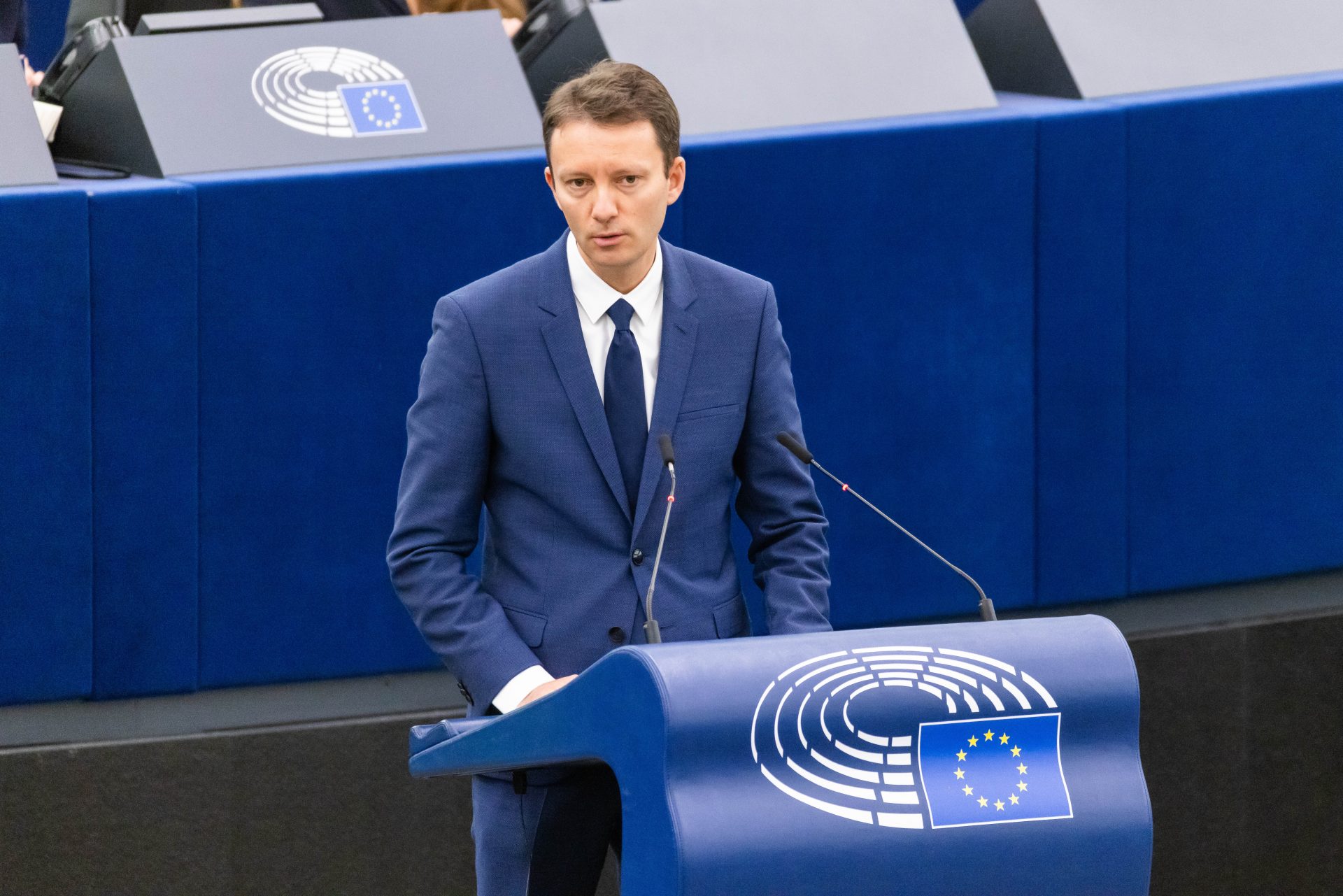
Brussels (enr) – Germany must take the lead in shaping the European Union’s next long-term budget, MEP Siegfried Mureșan said, calling on Berlin to use its weight as the bloc’s largest economy and to resist any move that would weaken the financial framework that funds EU priorities.
“Germany’s economic weight makes its leadership essential. But leadership must also mean finding a way to finance the priorities we have agreed on together,” Mureșan told the European Newsroom (enr).
“German businesses benefit from European research, cross-border infrastructure and investment across the Single Market. A weaker European budget would affect them too,” said the Romanian politician, who leads the negotiations on behalf of the European Parliament.
Leading EU budget lawmaker urges Germany to back EU priorities, resist MFF cuts
The multi-year budget, known as the multiannual financial framework (MFF), sets how much money the EU can spend over several years and is one of the bloc’s most contested files. The largest share of EU budget revenue currently comes from member state contributions.
The most important source is contributions based on each country’s economic strength, measured by gross national income (GNI). As the EU’s largest economy, Germany makes by far the largest contribution. At the same time, it benefits greatly from the EU single market.
New proposal widens the divide
European Council President António Costa on Saturday (November 21) presented a compromise proposal designed to guide talks among EU member states. Costa’s plan would cut about €204 billion from the European Commission’s original proposal and put forward a 3% digital tax on large companies. This would reduce the overall budget to 0.97% of the EU’s GNI, excluding NextGenerationEU payments, amounting to about €1.78 trillion in current prices.
With the cuts, Costa at least partly meets demands from Germany and other wealthy states, including the Netherlands, Austria, Denmark, Sweden and Finland. However, German Chancellor Friedrich Merz (CDU) rejected the new proposal, calling it “a first step” but lamenting that the total volume was “still too high”.
The European Parliament, however, stands firm on a budget set at 1.27% of GNI, Mureșan said. “Our goal is not just to find a number halfway between two positions, but to adopt a budget that can deliver.” He added that Costa’s latest proposal “does not meet that test”.
Mureșan argued that the next package must deliver visible results for citizens rather than shrink to meet national spending pressures. “Providing a budget that cannot deliver is a guaranteed path towards alienating people and pushing them towards extremist parties,” he told the enr.
Costa’s proposal also includes sharp cuts to cohesion funds for economically weaker regions, meeting demands from the German government. When asked which regions Parliament would seek to protect first, Mureșan criticised the proposed cuts and rejected the idea of deciding which regions should lose funding to cover some member states’ reluctance to pay for shared European priorities.
Parliament has welcomed the proposal for a digital tax, but Mureșan rejected the notion of introducing it gradually. “Any arrangement must provide reliable revenue within a clear timetable. Phasing in a levy cannot become a way of postponing it indefinitely.”
Crunch talks ahead
EU leaders will meet to discuss the budget in Brussels on Thursday (November 26). Mureșan called on leaders to “put our money where our priorities are”, referring to security and competitiveness as key areas, and urged them to “correct the proposed cuts”.
“Further cuts would move the Council further away from Parliament and make a final agreement harder. Cuts, more cuts and a side of cuts are not an investment strategy,” Mureșan said. “We are ready to negotiate, but we will not give our consent to a budget that leaves Europe unable to fulfil its responsibilities”.
Given the conflicting positions among member states and a clear divide with the European Parliament, a final budget agreement is not expected before the regular summit of EU leaders in December.
Source - europeannewsroom.com ↗